Black Swirl Feather Ornament Patterns
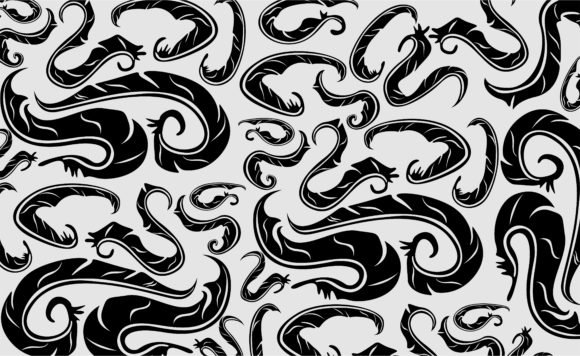
Black swirl feather ornament patterns have become a go-to design element for creators across a wide range of projects. Whether you are designing a logo, creating packaging, building a website, or crafting invitations, these patterns offer a blend of elegance, movement, and sophistication. The flowing lines and feather-like motifs bring a sense of lightness and detail that can elevate almost any visual work. But as with any design asset, knowing how to use them effectively matters as much as having the right file in hand. Many people download these patterns only to run into avoidable issues that affect their final results. Let’s look at the common mistakes, the overlooked details, and the practical steps you can take to get the most out of black swirl feather ornament patterns.
Choosing the Wrong File Format for Your Project
One of the most frequent missteps happens before the design work even begins. The download includes JPG, EPS, PNG, SVG, and AI files. Each format serves a distinct purpose, and using the wrong one can cause problems with scaling, quality, and editing flexibility. For instance, a JPG file is raster-based and will lose clarity if you enlarge it beyond its original size. If you plan to print a large banner or poster, relying on a JPG version of your ornament pattern could result in a blurry or pixelated final product. The same applies to PNG files, which, while useful for transparent backgrounds on the web, are still resolution-dependent.
On the other hand, vector formats like EPS, SVG, and AI are resolution-independent. They scale to any size without losing sharpness. If you are a small business owner designing a logo or a freelancer creating repeatable patterns for fabric printing, these vector formats should be your first choice. The mistake comes from grabbing the first file you see without considering the final output. Take a moment to match the format to your workflow. For web use, SVG offers crisp rendering and small file sizes. For professional print design or custom edits in software like Adobe Illustrator, AI or EPS gives you full control over every curve and anchor point.
Overlooking Resolution and Scalability Before Use
Even when you choose a vector format, there is another layer of detail that often gets ignored: checking the actual design at different scales. A black swirl feather ornament pattern might look beautiful at its default size, but when scaled down for a business card or scaled up for a wall mural, the visual balance can shift. Thin lines may become too delicate to see at small sizes, or the density of the swirls might overwhelm a compact layout. This is not a flaw in the pattern itself, but a mismatch between the pattern’s natural complexity and the space it needs to read well.
Before committing to a design, test the pattern at the intended dimensions. Use the vector files to preview how the thickness of the curves and the spacing between elements hold up at different sizes. A common oversight is assuming that vector scalability automatically guarantees visual legibility. Scalability means the edges stay sharp, but the design still needs to be proportionally appropriate. If you are printing on a small gift tag or a large backdrop, adjust the scale thoughtfully. You might also consider simplifying the ornament motif if the details become too tight at smaller scales.
The Licensing Blind Spot
Another area where many people stumble is licensing. Black swirl feather ornament patterns, like any design asset, often come with specific usage terms. The download may allow personal and commercial use, but there can be restrictions on redistribution, resale of the pattern as a standalone file, or use in certain types of merchandise. Entrepreneurs, marketers, and small business owners especially need to pay attention here. Using a pattern in a product line or on packaging without confirming the license can lead to legal headaches later, not to mention the cost of redesigning materials.
Always read the licensing agreement that comes with your download. If you plan to use the pattern in a product you sell, check whether the license covers commercial use. Some assets require attribution, while others prohibit use in certain industries or formats. If the terms are unclear, reach out to the creator or marketplace for clarification. This is one of those steps that feels like a hassle in the moment but saves a great deal of trouble down the road.
Misplacing the Ornament in Your Overall Design
Black swirl feather ornament patterns are visually striking, which is both their strength and their risk. A common design mistake is placing them into a composition without considering how they interact with other elements. The intricate curves and dark tones can dominate a layout, overwhelming text, photographs, or other graphics. This often happens when someone falls in love with the pattern and wants it to be the star of every piece. The result can feel busy, confusing, or unbalanced.
The better approach is to treat the ornament pattern as an accent or a supporting structure. Use it as a border, a background texture, or a decorative frame rather than the main visual. You can also adjust the opacity, scale, or color to make it more subtle. For example, a lightened version of the pattern behind a headline can add depth without competing for attention. Or you could use a single feather motif as a callout element rather than repeating the full pattern across the entire background. Think of the ornament as a tool to guide the eye and add elegance, not as a wallpaper that fills every empty space.
Ignoring the Output Method and Production Constraints
Another overlooked detail is how the pattern will be produced or printed. The file you use for a digital screen may not translate well to offset printing, heat transfer, laser engraving, or embroidery. Each production method has its own limitations. For example, a very fine line in a vector file might be too thin for a laser cutter to reproduce accurately. Similarly, if you are using the pattern for screen printing, the smallest gaps between lines need to be wide enough to avoid ink bridging or bleeding.
Before finalizing your design, research the production method you plan to use. If you are working with a print shop or manufacturer, ask them about their file requirements and limitations. They can tell you the minimum line thickness, the safe color space (CMYK vs. RGB), and whether they prefer specific file formats. Adjust your ornament pattern accordingly. Sometimes small modifications—like thickening certain lines or simplifying high-density areas—make the difference between a crisp final product and a disappointing one.
What to Check Before You Download or Buy
If you are shopping for black swirl feather ornament patterns, a few checks beforehand can save you time and frustration. First, look at the file list. Confirm that the download includes the formats you actually need. If you work exclusively in a vector environment, AI and EPS are essential. If you need to share the design with clients who use different software, SVG and PNG give you flexibility. Second, preview the pattern at multiple sizes if possible. Some marketplaces allow you to zoom in on details. Use that to examine the line quality and the spacing between elements. Third, read the reviews or ask questions about usage experience from other buyers. They often highlight details that the product description does not mention, such as whether the pattern is easy to edit or how it behaves when repeated.
Also consider the style of the ornament. Black swirl feather patterns vary widely, from dense and baroque to light and minimal. Think about where you intend to use it. A heavily detailed ornament might be perfect for a luxury wedding invitation but feel out of place on a modern app interface. Matching the aesthetic tone to your project’s purpose will make the pattern feel intentional rather than decorative for the sake of decoration.
Finally, verify the file integrity. If you are downloading from a source that offers a preview, check that the actual files are clean and well-organized. Sometimes a poorly constructed vector file can have stray anchor points, uneven curves, or missing fills. Opening the file in your design software and running a quick clean-up command can fix minor issues, but it is better to start with a reliable file in the first place.
Black swirl feather ornament patterns offer a lot of creative potential when you approach them with a little foresight. By choosing the right format, testing scalability, respecting licensing, using the pattern thoughtfully, and matching it to your production method, you avoid the common pitfalls that can derail a project. Whether you are a hobbyist working on a personal project or a professional creating a client deliverable, these patterns can deliver elegance and impact—as long as you use them on your terms.