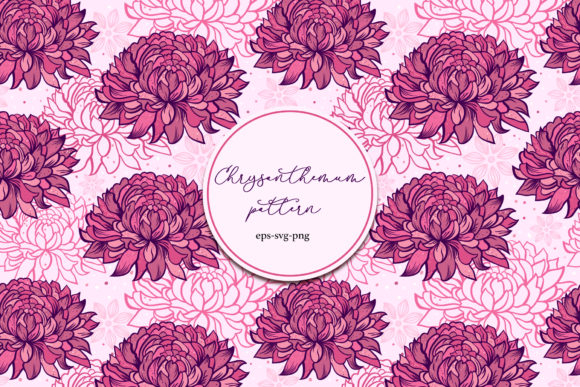
Chrysanthemums Seamless Pattern: A Versatile Floral Design for Creative Projects
Floral motifs have long been a staple in design, but few flowers carry the same depth of symbolism and visual versatility as the chrysanthemum. When arranged into a seamless pattern, chrysanthemums offer a balance of elegance and repeatability that suits a wide range of commercial and personal projects. Whether you are designing fabric, wallpaper, stationery, or packaging, understanding what a chrysanthemum seamless pattern brings to the table can help you decide if it is the right fit for your next creative endeavor.
What Makes a Chrysanthemum Seamless Pattern Distinct
A chrysanthemum seamless pattern is a repeating design element built around the distinctive bloom of the chrysanthemum flower. Unlike abstract or geometric repeats, this pattern relies on the natural form of the flower—its layered petals, radial symmetry, and varied color possibilities. The seamless nature of the file means the design tiles perfectly across any surface without visible seams, making it suitable for large-scale applications like wallpaper or fabric rolls.
What sets the chrysanthemum apart from other floral patterns is its structure. Chrysanthemum petals radiate outward in dense clusters, creating a texture that can read as either bold and graphic or soft and painterly, depending on the rendering style. In a seamless pattern, this structure allows for a rhythm that is both organic and repeatable. The flower’s natural symmetry adapts well to tiling, and when paired with complementary leaves or geometric accents, the pattern can feel contemporary or traditional depending on the design choices.
Files typically come in a ZIP archive containing EPS, SVG, and PNG formats on a 700 x 700 pixel artboard. This range of vector and raster options gives you flexibility across different software environments and output sizes. The EPS and SVG vectors allow for infinite scaling without quality loss, while the PNG gives you a ready-to-use preview for quick mockups or web use.
How This Pattern Compares with Other Floral Seamless Designs
When evaluating a chrysanthemum seamless pattern against other floral repeats, several factors come into play. Popular alternatives include rose patterns, peony designs, daisy repeats, and mixed-bouquet motifs. Each has its own visual character and practical tradeoffs.
Scale and density: Chrysanthemum blooms tend to be medium-to-large in proportion, which means a pattern built around them often has fewer repeats per square inch than a pattern made from smaller flowers like daisies or forget-me-nots. This can make the chrysanthemum pattern more suitable for statement pieces—a single bold motif repeated across a throw pillow or a feature wall. If you need a very dense, highly detailed pattern, a mixed floral or multi-scale design may offer more visual complexity, though it may also risk looking busy at smaller sizes.
Mood and tone: Roses often carry romantic or vintage connotations, while peonies lean toward lush and opulent. Chrysanthemums, by contrast, occupy a middle ground. They can be cheerful and hospitable, symbolizing friendship and joy in many cultures, while also lending themselves to crisp, modern looks when rendered in monochrome or limited palettes. This makes the chrysanthemum pattern more adaptable across different branding and home decor styles than some single-flower alternatives.
File format and usability: Many seamless pattern packs offer similar formats, but the specific inclusion of EPS and SVG in a single archive is a practical advantage. EPS files are widely supported in professional design software like Adobe Illustrator, while SVG works natively in web tools and browser-based editors. Having both means you are not locked into one ecosystem. The PNG serves as a fast reference for previewing the pattern without opening a vector editor.
Practical Applications Across Different Media
A chrysanthemum seamless pattern is well-suited to a range of physical and digital products. Here are some common use cases and how the pattern performs in each:
- Fabric and textiles: The repeat tile works smoothly for continuous yardage. Because chrysanthemum patterns often have moderate scale, they look good on both garment panels and home decor items like curtains or upholstery. The vector formats allow you to resize the repeat for different fabric widths without distortion.
- Wallpaper: Seamless tiling is essential here. The 700 x 700 artboard provides a reasonable base size that can be scaled up for larger walls. The symmetry of the chrysanthemum helps the pattern align naturally along wall edges and corners.
- Home decor accessories: Items like throw pillows, mugs, coasters, and trays benefit from the pattern’s centered or layered look. A single bloom or a cluster works well on small surfaces without looking overcrowded.
- Stationery and cards: Greeting cards, note pads, and gift wrap can leverage the pattern’s repeatability. The vector formats let you adjust colors or scale to fit card sizes without losing sharpness.
- Packaging: Boxes, bags, and labels often require repeated branding elements. A chrysanthemum pattern can serve as either a background texture or a primary decorative element, depending on the brand’s visual language.
- Digital backgrounds: For websites, social media graphics, or digital scrapbooking, the PNG gives you a ready-to-use tile, and the SVG allows responsive scaling on screens.
Strengths and Tradeoffs to Consider
Choosing a chrysanthemum seamless pattern is rarely a question of quality—it is more about fit. Here are the main strengths and tradeoffs to weigh.
Strengths: The pattern’s natural symmetry makes tiling straightforward and visually satisfying. The flower’s cultural associations with positivity and longevity can add a layer of meaning to your project. The file formats cover both professional and casual workflows, reducing the need to convert between formats. The 700 x 700 artboard size is a practical sweet spot: large enough to show detail but small enough to keep file sizes manageable. Vector formats mean you can scale the pattern from a business card to a billboard without losing edge quality.
Tradeoffs: Because the pattern features a distinct floral motif, it may not suit projects that require a more abstract or geometric look. If your brand or aesthetic leans minimalist or industrial, a chrysanthemum pattern could feel too decorative. Additionally, the 700 x 700 artboard, while practical, may be too small for very large-format printing without upscaling. While vector formats handle scaling well, extremely large prints may still require some precision testing. Finally, the pattern’s visual impact depends heavily on the color palette used. A multicolor chrysanthemum pattern can look vibrant, but if you need a strictly monochromatic design, you may need to adjust or recolor the SVGs yourself.
When This Pattern Is the Right Choice
A chrysanthemum seamless pattern is an excellent choice when you need a design that is both decorative and systematic. It works well for projects where you want the flower to be the central visual element without overwhelming the space. It is also a strong option when you need to produce materials across multiple product lines—fabric, wallpaper, stationery, and packaging—because the same repeat can be applied to each medium with consistent results.
If you are designing for a brand that values warmth, tradition, or nature-inspired themes, the chrysanthemum offers a distinctive alternative to more common floral motifs. It is also a suitable choice for seasonal collections, particularly autumn themes, as chrysanthemums are closely associated with fall blooms in many regions. However, the pattern is not limited to one season; with the right color palette, it can work for spring and summer applications as well.
When You May Need Another Option
There are situations where a chrysanthemum seamless pattern may not be the best fit. If your project requires a very small, dense repeat pattern that fades into the background, a multi-floral or abstract design might serve better. Similarly, if you need a pattern with very specific cultural or symbolic meanings from other flowers, the chrysanthemum may not align with your message in every context.
For highly minimalist or industrial branding, a floral pattern of any type may feel out of place. In those cases, geometric repeats or monochrome line patterns could be more appropriate. Finally, if you need a pattern that works at extremely close distances—like phone cases or small journals—test the 700 x 700 tile at that scale first to ensure the chrysanthemum reads clearly and does not become a blur of petals.
Factors That Influence Your Decision
When evaluating a chrysanthemum seamless pattern, consider the following decision factors:
- Scale and proportion: How large will the final surface be? A wallpaper wall may benefit from a larger repeat, while a notebook cover may need a tighter scale. Because the pattern is vector-based, you can adjust scale, but be aware that changing proportions alters how the blooms relate to each other.
- Color control: The EPS and SVG formats allow full color editing. If the pattern comes in a specific palette, ensure you have the ability to recolor it to match your project’s brand or mood.
- Production method: For print-on-demand services, the PNG gives you a quick upload option, while vector files give you flexibility for custom sizing. Check your printer’s requirements for file format and DPI before proceeding.
- Audience preference: If your target audience responds well to floral imagery broadly, a chrysanthemum pattern offers a specific but approachable aesthetic. If you are unsure, compare with a more generic floral pattern to see which resonates better.
- Licensing and use rights: Most patterned file packs come with standard commercial use licenses, but verify that the specific listing allows the type of production you need, especially for mass-produced items.
Making an Informed Choice
A chrysanthemum seamless pattern offers a well-rounded option for anyone working with repeat designs across multiple products. Its distinct flower shape, versatile file formats, and scalable vector structure make it a practical choice for both professional designers and hobbyists. The key is to align the pattern’s visual character with your project’s purpose. If you need a repeat that feels structured yet organic, decorative without being distracting, and adaptable across fabric, paper, and screen, this pattern type is worth considering.
Before finalizing your selection, evaluate your production workflow, color requirements, and the physical scale of your intended output. A chrysanthemum seamless pattern can serve as the foundation for a cohesive product line, but it performs best when matched with the right context and format. The included EPS, SVG, and PNG files give you the tools to test it at different sizes and applications, so take the time to explore those options before committing to a full production run.