Proud to Be a Miner Hard Hat: What to Know Before You Download, Design, or Print
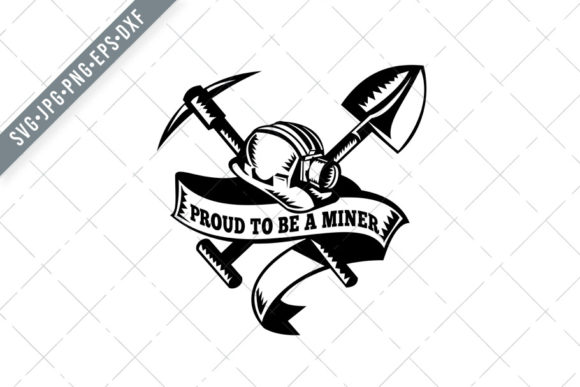
There is something striking about a bold, black-and-white woodcut-style illustration of a crossed shovel and pick axe paired with a miner’s hard hat. The words “Proud to Be a Miner” complete the image, and it resonates far beyond the mining community. This particular design, available as an SVG, PNG, DXF, EPS, and JPG bundle, has become a go-to for anyone creating T-shirts, mugs, wall art, greeting cards, party invitations, scrapbook pages, and even stencils. But owning the file is only the first step. Many people jump in, download the set, and then run into problems that are entirely avoidable.
Whether you are a hobbyist making a gift, a small business owner building a product line, or a creator experimenting with new materials, understanding how to work with this illustration correctly will save you time, money, and frustration. Let’s walk through the common mistakes, the overlooked details, and the practical steps that separate a smooth project from a disappointing one.
What Exactly Is the Proud to Be a Miner Hard Hat Design Set?
At its core, this is a digital design bundle featuring a retro woodcut-style illustration. The artwork centers on a crossed spade or shovel and a pick axe, with a miner’s hard hat placed prominently above or alongside the tools. The phrase “Proud to Be a Miner” is integrated into the composition, and everything is rendered in black and white on an isolated background.
Because it comes in multiple file formats, you can use it with a wide range of tools. The SVG file works with Silhouette Studio, Cricut Design Space, and other vector editing software. The PNG file is provided at 300 dpi and at least 10 inches in size, which means it prints cleanly without pixelation. The DXF and EPS files expand compatibility further, and the JPG gives you a simple, ready-to-use image. This flexibility is exactly what makes the set attractive to beginners and professionals alike. But that same flexibility also opens the door to missteps.
Assuming All File Formats Are Interchangeable
One of the most frequent mistakes people make is treating the SVG, PNG, DXF, EPS, and JPG files as if they are all the same. They are not. Each format serves a different purpose, and using the wrong one for your project can lead to jagged edges, lost detail, or machine errors.
For example, if you try to load the JPG into Cricut Design Space and attempt to cut it as a print-then-cut image without checking the background transparency, you may end up with a white box around your design. Similarly, using the PNG file for a large vinyl decal might result in scaling issues because the PNG is a raster image. While it is high resolution, enlarging it too much will eventually cause blurring.
What to do instead: Always match the file format to your workflow. Use the SVG for cutting machines like Cricut or Silhouette. Use the EPS or DXF if you are working with older software or need compatibility with Adobe Illustrator or CorelDRAW. Use the PNG when you need a high-resolution image for digital printing or social media graphics. And keep the JPG as a reference or for simple, no-editing-needed uses like uploading to a print-on-demand site that accepts JPEGs. Take a moment before you open the file to confirm which format your software or machine actually needs.
Overlooking the Importance of the Isolated Background
The design is delivered on an isolated background. That is a huge advantage, but only if you understand what it means and how to preserve it. An isolated background typically means the background is transparent (in the case of the PNG and SVG) or that it is a clean, solid white (in the JPG). If you are cutting the design with a machine, you need the transparent background so that your cutter recognizes only the design itself and not a surrounding box.
A common mistake is opening the PNG or JPG in a basic image viewer, copying it, and pasting it into design software without checking whether the transparency has been preserved. Many free tools automatically flatten the image to a white background. If that happens, your cutting machine will try to cut around a rectangle rather than around the shovel handle and hard hat brim.
To avoid this, open the SVG or the PNG with a program that respects transparency, such as Adobe Illustrator, Inkscape, or even the free version of Silhouette Studio. If you must use the JPG, plan for a white background and either design around it or manually remove it using an image editor. Checking this detail before you start saves you from wasting vinyl, paper, or transfer tape.
Scaling Without Respecting the Design’s Integrity
The PNG file is provided at 10 inches or larger at 300 dpi. That is excellent for most projects, but it does not mean you can freely scale it down to one inch or up to three feet without consequence. Scaling down too much can cause fine details, especially the lines in the woodcut-style illustration, to become too thin to cut or print clearly. Scaling up too much, even with the vector SVG, can make the design feel sparse or unbalanced if the proportions are not adjusted.
Let’s say you want to put the design on a small coffee mug. If you shrink the entire composition to fit a 3-inch area, the crossed pick axe and shovel may lose the intricate line work that gives the woodcut style its character. The hard hat might become a small blob rather than a recognizable helmet. On the other hand, if you enlarge it to cover the back of a hoodie, the spacing between elements might look too tight or too loose, depending on the original layout.
The solution is to test your scale before committing to a final product. Use the SVG file to resize the design in vector software so that the lines remain sharp at any size. Preview the design at the actual print or cut dimensions. If you are using a cutting machine, run a test cut on scrap material to see if the smallest details survive. Adjust the size in small increments. You may find that the design looks best at a medium scale where the cross and helmet are distinct but not cramped.
Treating the Design as a Single Use-Only Asset
Another missed opportunity comes from thinking of this bundle as a one-time purchase for a single project. The whole point of offering SVG, PNG, DXF, EPS, and JPG files is to give you the freedom to repurpose the design across many mediums. Yet many people download the set, make one T-shirt, and never open the files again.
Consider all the ways you can apply this illustration. Use the SVG to create a layered vinyl decal for a toolbox, a water bottle, or a vehicle window. Use the PNG to make iron-on transfers for tote bags or aprons. Use the EPS to print large-format posters for a mining heritage event. Use the DXF to engrave the design onto wood or acrylic with a laser cutter. Use the JPG to create digital thank-you cards or social media banners for mining-themed pages. The design also works well for party invitations and scrapbooking layouts, especially when printed on textured cardstock to enhance the woodcut feel.
If you only use one format for one project, you are leaving value on the table. Keep the files organized in a folder on your computer, and revisit them whenever you need a rugged, classic design. The black-and-white palette works on almost any color background, so it is versatile across seasons and occasions.
Ignoring the DPI and Size Specifications for Print Projects
When the product description says “PNG file 300 dpi Size at least 10 inches or bigger,” that is a guarantee of print quality. But it also sets an expectation. If you take that PNG and paste it into a document that expects 72 dpi, or if you stretch it beyond its native dimensions, you lose the sharpness. This is especially noticeable with the fine lines in a woodcut illustration. A blurry pick axe handle or a fuzzy hard hat brim will make the whole piece look unprofessional.
Beginners sometimes assume that any file can be scaled freely in word processing software. That is not the case. When you drag the PNG into Microsoft Word or Google Docs, the software often scales the image to fit the page, changing the effective DPI. To preserve quality, open the PNG in an image editor first, check the dimensions and resolution, and then place it into your layout at the correct size. If you need a larger print, use the SVG or EPS to scale the design as a vector, then export a new PNG at the required DPI.
If you are sending the design to a print shop, ask them which format they prefer. Many professional printers accept EPS or high-resolution PDFs generated from the SVG. Providing the correct format from the start avoids rework and ensures your final product looks as good as the preview.
Choosing the Wrong File for Cutting Machines
Silhouette Studio and Cricut Design Space both support SVG files, but they handle them slightly differently. A frequent issue is users opening the JPG or PNG in these programs and then trying to trace or convert the image into a cut line. That added step introduces errors, such as extra nodes, broken paths, or missing sections of the design. The result is a cut that looks deformed or incomplete.
The SVG file is already a vector with clean paths. You do not need to trace it. Simply upload the SVG directly into your cutting software, resize it as needed, and send it to the machine. If you are using an older version of Silhouette Studio that does not support SVG, use the DXF file instead. For Cricut, the SVG is usually the best choice. Testing a small cut with scrap material will confirm whether the file is working correctly before you commit to your final material.
One more tip: when you import the SVG, check that the design is grouped properly. Sometimes software interprets the crossed shovel and pick axe as separate pieces. If that happens, group them back together, then proceed. This small check prevents the machine from cutting the tools as individual pieces scattered across your mat.
Underestimating the Value of a Cohesive Brand or Theme
If you are creating products for sale, whether on Etsy, at craft fairs, or for local clients, the Proud to Be a Miner hard hat design can become a signature piece. But using it effectively means pairing it with complementary fonts, colors, and materials. A common mistake is to throw the design onto a T-shirt without considering the overall look. The design deserves a presentation that matches its heritage style.
Think about using it alongside earthy tones like charcoal, ochre, deep green, or brown. Pair it with a sturdy fabric like a heavy cotton tee or a canvas tote. For digital designs, use a background texture that mimics paper or wood. The woodcut style works beautifully with rough or natural textures, so avoid glossy, overly slick backgrounds that contradict the aesthetic. If you are making invitations or banners for a mining-themed celebration, carry the same black-and-white motif across all your elements, from the envelope liner to the thank-you card.
Taking this extra step with consistency makes your product or presentation feel intentional and high-quality. It also builds trust with customers who see that you care about the details.
Avoiding Buyer’s Remorse by Checking Compatibility First
Before you purchase any digital design set, it is wise to confirm that your software and hardware can handle the included file types. Most modern cutting machines and design programs work with SVG and DXF. EPS files are standard for professional vector software. PNG and JPG are universal. But if you are using a very old version of a program, or if you rely entirely on a mobile app that does not support vector files, you may find that some files are unusable.
The good news is that the bundle offers four vector formats plus two raster formats, which covers almost every scenario. Still, take two minutes to verify your specific setup. A quick search for “does my software support SVG” or “how to import DXF into my program” can save you from frustration after the download. And if you are new to this, start with the PNG for simple printing and work your way up to using the SVG for cutting. The files will be there when you are ready.
Final Practical Advice for Getting the Most Out of Your Design
Make a habit of keeping your design files organized. Create a folder on your computer named by project or theme, and keep all five formats together. Rename the files with descriptive names so you can find them quickly later. If you download the set and immediately use it for one project, you might forget where you saved the SVG when you need it again months later.
When you are ready to print or cut, always preview the design at the actual output size. Look for any thin lines that might not cut well, any small text that might become illegible, and any areas where the black fills might bleed into each other if printed on a porous material. Adjusting the design before you commit is always easier than fixing a ruined shirt or a wasted sheet of vinyl.
Finally, do not be afraid to experiment. The design is provided in black and white, but you can invert it, recolor it, or layer it with other elements. The woodcut style lends itself to distressed effects, sepia tones, and metallic foils. The more you explore, the more uses you will discover.
Whether you are making a gift for a retired miner, creating a product line for a local mining museum, or simply enjoying a weekend craft project, the Proud to Be a Miner hard hat design gives you a solid foundation. Pay attention to the formats, respect the resolution, test your scale, and think beyond a single use. With a little care, you will get results that look professional and last a long time.