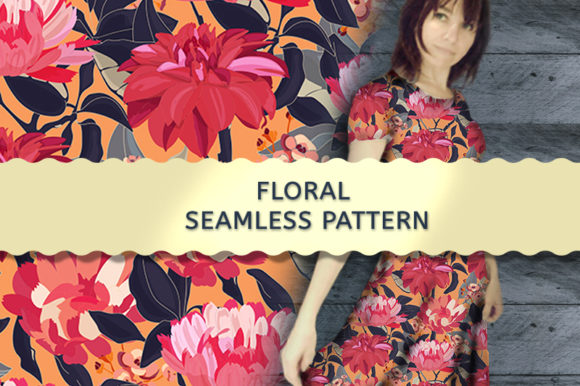
Floral Pattern: Peonies, Zinnias, and Art Floral Vector Seamless Pattern
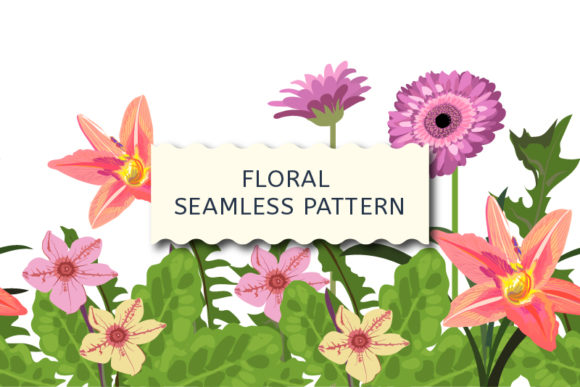
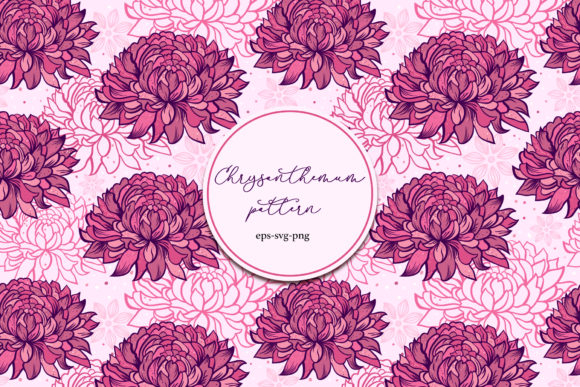
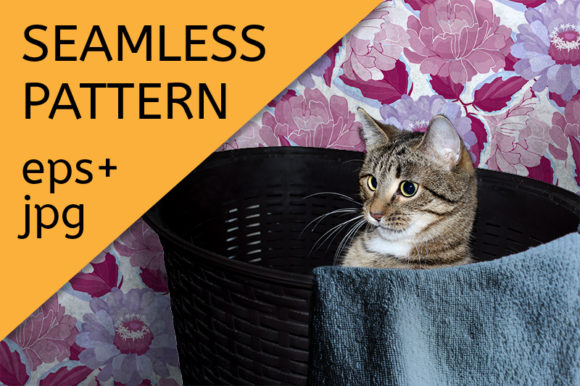
A well-crafted floral vector seamless pattern can transform a simple design project into a cohesive visual experience. The combination of peonies and zinnias in a color palette of maroon, violet, purple, and burgundy on a clean white background offers both elegance and versatility. This particular pattern is designed as a tileable vector file, ensuring seamless repetition across any surface—from fabric and interior textiles to wallpaper, wrapping paper, and digital paper. The package includes an EPS 10 file (compatible with Adobe Illustrator and importable into Photoshop), a high-resolution 6000x4000 px JPG, and a TXT readme file. For designers, small business owners, content creators, and anyone working with repeat patterns, understanding how to integrate such an asset into a practical workflow is essential.
The Role of Seamless Patterns in Design Workflows
Seamless patterns serve as foundational building blocks in many creative and commercial projects. Instead of manually repeating elements and aligning edges, a ready-to-use vector pattern allows you to focus on composition, color balance, and application. In professional settings, pattern assets save hours of repetitive work and ensure consistent quality across large surfaces. For example, when designing fabric for home decor or fashion, a tileable pattern eliminates visible seams and allows for accurate previews of how the design will look when repeated. Similarly, in digital product creation—such as scrapbooking kits or website backgrounds—a seamless pattern provides a stable base that can be scaled, rotated, or recolored without losing precision.
Using a pre-made pattern like this one also supports collaboration and batch production. A small business owner producing multiple lines of wrapping paper can rely on the same vector file to generate variations by adjusting overlay colors in Illustrator. An educator creating classroom materials can drop the pattern into a document as a subtle background without worrying about alignment. The isolated floral motifs (peonies, zinnias, and leaves) on white make it easy to layer other elements on top, further extending its utility.
Before You Start: Preparing Your Project
Before integrating the pattern into your workflow, consider the specific requirements of your output medium. For print projects, resolution and scale are critical. The included JPG is 6000x4000 px, which works well for large prints or detailed previews, but the EPS vector file offers infinitely scalable paths without pixelation. Read the TXT readme file first; it typically contains important notes about layers, color spaces (CMYK vs. RGB), and recommended software versions. Knowing these details upfront prevents missteps during production.
Also examine the color palette. Maroon, violet, purple, and burgundy are rich, saturated tones that pair well with neutral backgrounds or metallic accents. If your project requires a different mood, you can easily recolor the vector elements in Illustrator using global swatches or the “Recolor Artwork” tool. Since the pattern is isolated on white, you can also place it over a different background color by adjusting transparency or using a clipping mask. Taking these preparatory steps ensures the pattern integrates naturally into your broader design system.
During the Creative Process: Integration with Software
Efficient integration begins with understanding how your tools handle vector patterns. In Adobe Illustrator, the EPS file can be opened directly. Once open, you can view the pattern swatch in the Swatches panel. Apply it as a fill to any shape, then adjust the tile size by double-clicking the swatch and modifying the tile dimensions. This allows you to control the repeat frequency—smaller tiles for delicate prints, larger tiles for bold statement pieces. If you need to edit individual motifs, simply expand the appearance of the fill to access the underlying vector paths.
For Photoshop users, the EPS can be imported as a smart object at any resolution. The included JPG is also useful for quick mockups, especially if you are layering the pattern over photographs or rendering product samples. When working on digital papers, you can create a seamless tile from the JPG by using the Offset filter (Filter → Other → Offset) to verify that the edges match perfectly—though the provided files are already seamless, it’s a good quality check. Many designers also use the pattern as a texture map in 3D visualization software for interior textile previews, making the vector source ideal for maintaining sharp edges even when distorted.
After the Design: Printing and Production
Once your design is finalized, the transition to physical production requires attention to repeat quality, color accuracy, and file format. For fabric printing, confirm that the vector file is in CMYK mode and that the pattern tile size corresponds to the desired repeat length (e.g., 24 inches for upholstery or 12 inches for quilting cotton). The EPS 10 format is widely accepted by commercial printers; supply it along with a reference JPG for proofing. For wallpaper, the seamless nature of the pattern means you can print continuous rolls without worrying about mismatched edges. If you are producing wrapping paper or digital paper packs, export the pattern as a high-res PNG with a transparent background if needed—the isolated white background in the original JPG can be removed using layer masks in Photoshop or by deleting the white fill in the vector file.
Quality control steps include printing a small sample at full scale to check color rendition and motif alignment. Because the pattern is vector, scaling down to a smaller tile for a test print is straightforward. Keep the readme file handy as it may include Pantone or HEX color references that help match the physical ink to the digital design. For long-term consistency, save an edited version of the EPS with your project-specific modifications, and note any adjustments made for future reference.
Long-Term Asset Management and Reusability
A single vector seamless pattern can serve many projects if organized properly. Create a dedicated folder system: store the original EPS and readme in an “Assets” directory, then place project-specific variants in subfolders. Because the pattern is built from distinct flowers (peonies and zinnias) and leaves, you can extract individual motifs for use as stand-alone clip art or as part of a larger composition. This modularity extends the value of the asset—you might use the full repeat for a wallpaper, then reuse the flower shapes in a logo or website header.
Tagging the file with relevant keywords (e.g., “floral,” “peonies,” “zinnias,” “maroon,” “seamless,” “vector”) in your digital asset management system helps you locate it quickly. If you collaborate with a team, the readme file acts as a quick reference for color codes and original dimensions. Over time, gathering a library of such patterns allows you to mix and match, creating new designs without starting from scratch. This approach is particularly useful for small business owners who need to refresh product lines seasonally—changing the color palette or combining two patterns can yield entirely new collections.
Workflow Examples Across Different Use Cases
Interior Designer: An interior designer selects this pattern for a client’s accent wall. They import the EPS into Illustrator, scale the tile to match the wall dimensions, and apply it to a room rendering. The designer then exports a PDF for the wallpaper manufacturer, who uses the vector file for precision printing. The rich burgundy and violet tones complement the client’s existing furniture.
Small Business Owner (Wrapping Paper): A boutique owner wants a signature wrapping paper. They download the pattern, open the JPG in Photoshop, and create a seamless sheet sized to 24”x36”. They add the store logo in one corner and export as a CMYK PDF for a local printer. The repeat pattern ensures no paper is wasted, and the high-res JPG allows for clear proofing.
Digital Content Creator: A blogger creates digital scrapbooking kits. They use the EPS to extract individual zinnia and peony motifs, recolor them in pastel variations, and save them as PNG stamps. The full pattern becomes a background paper in the kit. The readme file provides the original color hex codes, making it easy to coordinate with other elements.
Freelance Graphic Designer: A designer receives a brief for a brochure background that should evoke a garden theme. They place the JPG pattern in InDesign at 30% opacity, then overlay text. For the cover, they use a masked version of the vector in Illustrator, scaling the pattern to a larger tile to create a more open feel. The project is delivered as a print-ready PDF, with the EPS included as a supplementary asset for future edits.
Practical Implementation Tips
- Test tile sizes early: Open the EPS and create a few rectangular objects filled with the pattern at different scales (e.g., 1x1 inch, 2x2 inch, 4x4 inch) to see how the flowers cluster or spread. This helps you decide the best repeat size for your medium.
- Recolor with global swatches: In Illustrator, convert all colors to global swatches before making changes. That way, updating one color updates every instance across the pattern, saving time if you need to produce multiple colorways.
- Use the JPG for quick mood boards: When presenting concepts to clients or teams, the JPG can be dropped directly into presentation software without any file conversion. It’s also useful for social media teasers.
- Keep the readme accessible: Store the TXT file alongside the vector source. It often contains metadata like creation date, color mode, and recommended use cases that can prevent confusion months later.
- Check for mirrored or doubled motifs: Although the pattern is seamless, printing on certain fabrics may show an obvious repeat if the tile is too small. Use the tested tile size from your earlier scale test to avoid this.
Implementing these steps ensures that the floral pattern works as a reliable component in your existing workflow rather than a decorative afterthought. By treating it as a utilitarian asset, you maintain creative freedom while saving execution time.
Whether you are designing for print, digital, or product development, a vector seamless pattern featuring peonies and zinnias in a sophisticated maroon-to-burgundy palette offers both beauty and practicality. The combination of EPS and JPG formats, along with the included readme, provides everything needed to integrate the pattern into a wide range of projects—from wall coverings to digital scrapbooking. Approach it with the same thoughtful planning you give to any other resource, and it will serve your work consistently, project after project.