Ornamental Flower Folk Art: Choosing the Right Decorative Elements for Your Creative Projects
When you are designing an invitation, laying out a book, or crafting product packaging, the visual style you choose can make or break the final impression. One option that has gained steady attention among designers, hobbyists, and small business owners is ornamental flower folk art — a digitally rendered style that draws from traditional folk motifs while offering modern flexibility. But is this the right choice for your specific project? This article walks through what makes this style distinct, how it compares with other decorative approaches, and the practical tradeoffs you should consider before committing to a set of clipart elements.
What Ornamental Flower Folk Art Brings to the Table
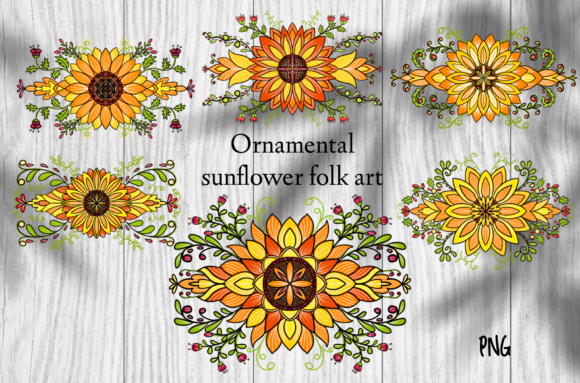
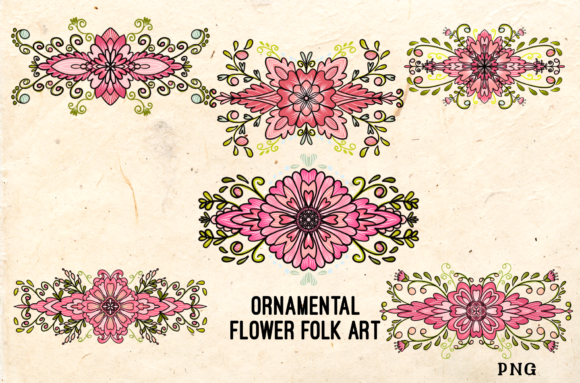
At its core, ornamental flower folk art refers to decorative floral designs inspired by folk art traditions — think bold outlines, vibrant color palettes, and patterns that feel both handcrafted and repeatable. In a digital clipart format, these elements are typically provided as transparent-background PNG files at high resolution (300 dpi, 2500×2500 pixels), making them ready to drop into any layout. The set often includes both full-color versions and black-stripe line art, giving you two distinct looks from the same design library.
What makes these elements stand out is the deliberate emphasis on bright, saturated colors that echo the energy of traditional folk painting. The floral motifs are not photorealistic; they are stylized, almost graphic, with a flat or slightly textured appearance that reads as handmade. This gives them a warmth and approachability that many modern vector icons lack. Because the files come with a transparent background, you can layer them over any colored paper or digital background without fussy masking work.
What You Actually Receive
A typical ornamental flower folk art clipart package includes 12 separate designs, each delivered in two versions — one in full folk-art color and one in black stripes (line art). At 2500×2500 pixels and 300 dpi, these are large enough for print projects as well as digital use. The transparent background is a critical feature: it means you can place the flower on a dark envelope, a pastel invitation card, or a patterned book cover without white halos around the edges. For anyone who has struggled with clipping paths or background removal, this alone can save hours of editing time.
How It Compares with Other Decorative Styles
No single design style fits every project. To decide whether ornamental flower folk art is the right match, it helps to see how it stacks up against common alternatives. Here are a few categories worth comparing:
Versus Generic Floral Vectors
Standard floral vector sets you might find on stock sites often lean toward realism or minimal flat design. They are clean, scalable, and neutral — but they can also feel impersonal. Ornamental flower folk art takes the opposite approach: it is intentionally decorative, with visible brush-like strokes and color choices that signal tradition and festivity. If your project needs to convey warmth, heritage, or a handcrafted feel, these folk art elements will outperform a generic botanical vector. On the other hand, if you need a subtle background element that does not compete for attention, a simpler vector might serve you better.
Versus Hand-Drawn Folk Art
Authentic hand-drawn or hand-painted folk art has an organic, one-of-a-kind quality that digital reproduction cannot fully replicate. However, hand-drawn work is expensive, time-consuming to commission, and difficult to modify. Ornamental flower folk art clipart bridges this gap: it preserves the visual language of handcrafted folk design while giving you repeatable, editable, high-resolution files. You lose the unique imperfections of a real brush stroke, but you gain consistency, speed, and the ability to scale the design across dozens of products without variation.
Versus Black-and-White Line Art
Many decorative clipart sets offer only color versions. This set includes black-stripe line art for each design, which is a significant advantage. Black-stripe line art works beautifully for coloring books, monochrome invitations, embossing, screen printing, or any application where color printing is not feasible. Having both color and line art in the same purchase means you are essentially getting two libraries for the price of one. If your workflow alternates between full-color and single-color projects, this duality is a practical win.
Strengths and Tradeoffs You Need to Know
Every design resource has limitations. Being aware of them upfront helps you avoid a mismatch halfway through a project.
Strengths
- High resolution and size: 2500×2500 pixels at 300 dpi gives you crisp prints up to about 8×8 inches without pixelation. For digital use, you have ample room to scale down without quality loss.
- Transparent background: No clipping or masking required. Drag and drop onto any background color or texture.
- Dual formats: Color and black stripe in one set. This is rare in clipart packages at this price point.
- Distinct style: The folk art aesthetic is instantly recognizable and stands out from generic clipart. It adds personality to books, cards, packaging, and branding materials.
- Consistency: All 12 designs share a unified style, so you can mix and match them within a single layout without visual clashes.
Tradeoffs and Limitations
- Fixed number of designs: 12 unique motifs may be enough for a small project but could feel repetitive if you are designing a large multi-page book or a broad product line. You might need to supplement with other elements.
- Style specificity: The folk art look is not neutral. It evokes a particular cultural and aesthetic tradition. If your brand or project calls for a minimalist, modern, or industrial feel, these designs will feel out of place.
- Raster format: These are PNG files, not vectors. While the resolution is high, you cannot scale them up infinitely without losing sharpness. For large-format printing (posters, banners), you may need vector alternatives.
- No customizability: Unlike layered vector files, you cannot easily change individual colors or edit the linework. What you download is what you use. If you need heavy customization, a vector-based folk art set might be more appropriate.
When Ornamental Flower Folk Art Is the Right Choice
Based on these strengths and tradeoffs, here are the scenarios where this style shines:
- Invitation and card design: Wedding, birthday, baby shower, or cultural celebration invitations benefit from the warm, festive look of folk art flowers. The transparent background makes it easy to pair them with elegant typography.
- Book interiors and covers: Whether you are self-publishing a poetry collection, a children's book, or a craft guide, ornamental flower folk art adds decorative chapter headers, page borders, or cover flourishes without overwhelming the text.
- Product packaging for small brands: Handmade soap labels, tea boxes, candle wrappers, or gift tags gain a handcrafted feel that aligns with artisanal branding.
- Bullet journals and planners: The black-stripe versions are perfect for coloring, stenciling, or heat embossing on paper. The size and resolution allow you to print them at a scale that fits A5 or A6 planners.
- Digital design projects: Social media graphics, blog headers, or online store banners can use these elements as accent pieces. The folk art style helps your content feel less corporate and more human.
When You May Need a Different Option
There are also clear situations where ornamental flower folk art is not the best fit:
- Large-format printing: If you need a mural, banner, or poster larger than 12×12 inches, the raster PNG format will start to show pixels. Look for vector clipart (SVG, EPS) that can scale infinitely.
- Ultra-modern or minimalist branding: Brands that rely on clean sans-serif typography, monochrome palettes, and geometric shapes will find the folk art style too busy and traditional. Simple line icons or abstract botanicals would align better.
- Projects requiring a large variety of motifs: With only 12 designs, you may run out of options if you need dozens of unique floral elements across a 100+ page book. Consider a larger clipart bundle or a pattern library.
- Clients who need editable source files: If you or your client requires the ability to recolor, resize, or reshape the elements, you will need vector files with separate layers. The PNG format is a finished product, not an editable source.
Practical Decision Factors to Consider
Before you purchase or commit to using ornamental flower folk art, ask yourself a few questions:
- What is the output medium? Print or digital? Small format or large format? The 300 dpi PNGs are excellent for typical print sizes up to 8×8 inches and for screen use. Beyond that, you may need vectors.
- How many elements do you need? Twelve designs can feel abundant for a single invitation but sparse for a 200-page book with decorative headers on every spread. Plan your layout ahead of time.
- Do you need the black-stripe version? If you are only designing for full-color digital use, the line art may go unused. But if you print in monochrome, create coloring pages, or work with screen printing, the line art is invaluable.
- Does the folk art style match your brand or content? Be honest about the tone you want. Folk art signals tradition, warmth, community, and handmade quality. If that fits your message, you are in good hands. If you need sleek or futuristic, look elsewhere.
- How much customization do you need? If your workflow requires adjusting colors to match a brand palette, the fixed-color PNGs will limit you. In that case, a vector set or a layered PSD would give you more control.
Making the Most of What You Get
If you decide that ornamental flower folk art aligns with your project, the transparent background and dual-format delivery already give you a head start. To maximize the value of the 12 designs, try these approaches:
- Layer the color and black-stripe versions: Place the black-stripe motif on top of the color version at a slight offset to create a shadow or emboss effect.
- Rotate, scale, and mirror: Because the backgrounds are transparent, you can flip and combine elements to create new compositions. A single flower rotated four ways can frame a square invitation card.
- Use the black-stripe art for heat embossing or foil stamping: Print the line art onto cardstock and use it as a stencil or transfer pattern. The crisp outlines are well-suited to these techniques.
- Combine with solid color blocks: Place a folk art flower in the corner of a solid-color panel to create a modern-meets-traditional contrast that feels deliberate and sophisticated.
Final Considerations
Ornamental flower folk art occupies a specific and valuable niche in the world of decorative design elements. It is not a replacement for vector libraries, hand-painted originals, or minimalist icons — nor should it be. Its strength lies in offering a cohesive, high-quality, instantly usable set of motifs that carry the visual personality of folk tradition into modern digital and print projects. For anyone designing invitations, books, packaging, or planner content that benefits from warmth and character, this style delivers a practical shortcut to a handcrafted look.
At the same time, the fixed number of designs, raster format, and strong stylistic identity mean it is not a one-size-fits-all resource. By weighing your project's scale, output format, and tonal needs against what these elements provide, you can make an informed choice that saves you time and produces results that feel intentional rather than accidental. Whether it becomes a staple in your design toolkit or a specialized resource for specific projects, ornamental flower folk art deserves a place on your radar if you value both efficiency and visual distinction.